
In 1730, at Khejarli, near Jodhpur, Amrita Devi and 362 fellow villagers of the Bishnoi community laid down their lives to protect the sacred Khejri trees. By embracing the trees to stop them from being cut on the orders of Maharaja Abhay Singh in Rajasthan, they carried out one of the world’s earliest recorded acts of environmental protest.
Guru Jambeshwarji, also called Jambhoji, founded the Bishnoi religion in the medieval period. He was a revered saint and philosopher. He established twenty-nine principles for his followers, called Bishnois, meaning “twenty-nine.” Six of these principles focus on nature protection. Among these, the two most profound are Jeev Daya Palani, which means being compassionate to all living beings.
Amrita Devi, a Bishnoi woman, along with her three daughters and other villagers in the area, sacrificed their lives to save the Khejri trees. This event took place in the year 1730. The Maharaja Abhay Singh, the ruler of the kingdom of Jodhpur, wanted to cut green Khejri trees that grew abundantly despite the harsh environment of the Thar desert for the construction of his new palace (Wood is used as fuel for burning limestone or chalk in domed kilns to make lime mortar as a construction material.)
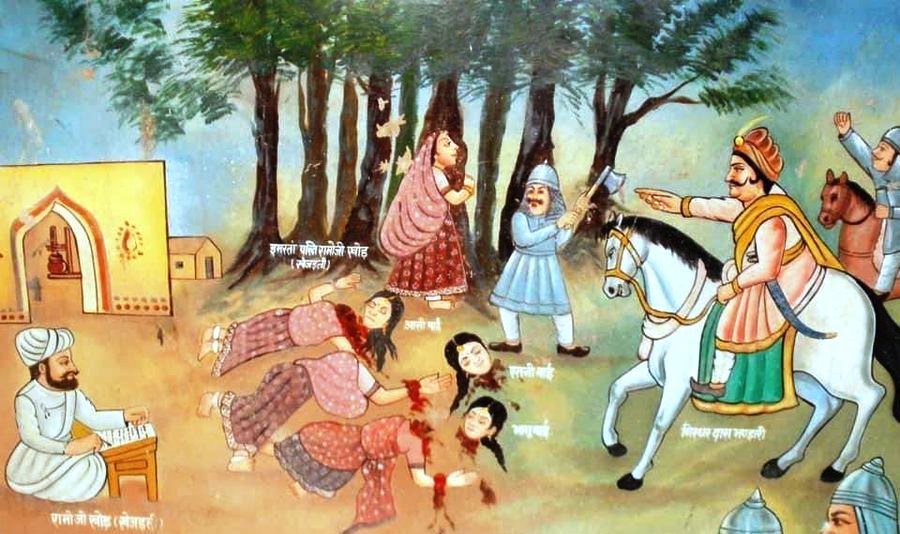
Guided by the Bishnoi principles of compassion for all living beings and respect for nature, the Khejarli villagers strongly opposed this decision. When the King’s men began cutting down the trees, Amrita Devi hugged a Khejri tree and refused to move, even when threatened. Amrita Devi boldly proclaimed, “Sar santey rukh rahe to bhi sasto jan” (If a tree is saved even at the cost of one’s head, it’s worth it). The king’s men, bound by orders, cut her down along with the tree.
News of the killings spread quickly to neighbouring Bishnoi villages. Soon, 362 more people came forward. They embraced the trees and sacrificed their lives to protect them. Among those killed were Amrita Devi’s three daughters—Asu, Ratni, and Bhagu. Throughout the massacre, the villagers remained non-violent and did not retaliate. They chose instead to lay down their lives peacefully for their cause. In total, 363 Bishnois perished in this brutal onslaught. Historical sources indicate that people from 49 villages participated in this sacrifice: 294 men and 69 women, including 36 married couples.
When the Maharaja learned of the massacre and the unwavering commitment of the Bishnoi people, he rushed to the village and offered his apology. He then issued a royal decree, engraved on a copper plate, permanently prohibiting the cutting of trees and hunting within the Bishnoi region. Defying traditional Hindu customs, the 363 martyrs of Khejarli were not cremated. True to the Bishnoi faith, which forbids cutting green trees even for funeral pyres, they were instead buried in the village of Khejarli.
A simple grave with four pillars originally marked the site of the sacrifice. Today, that same site has become a place of remembrance. A large stone memorial now stands tall there.
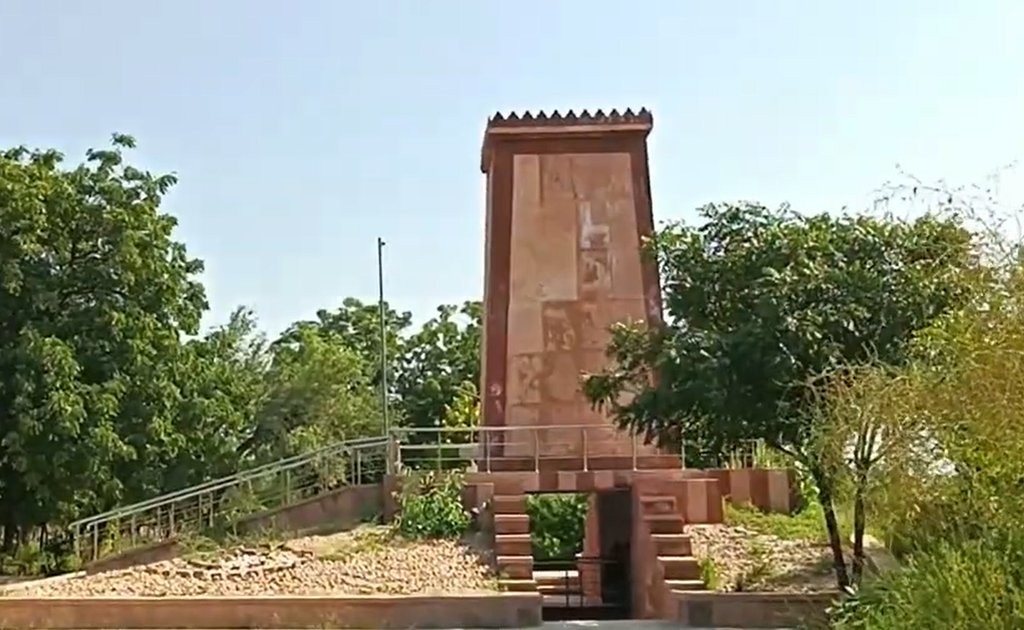
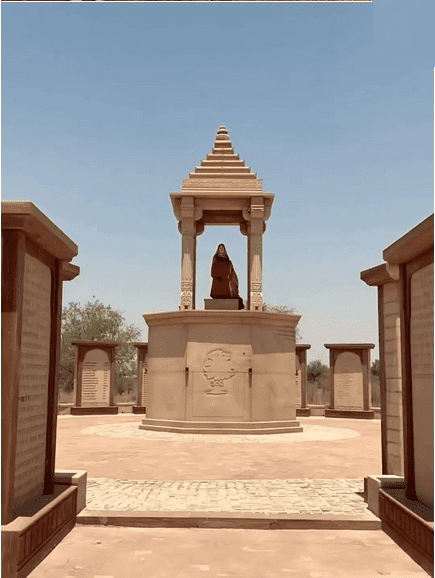
The towering monument stands with a statue of Amrita Devi. A plaque below it bears the names of all 363 martyrs.
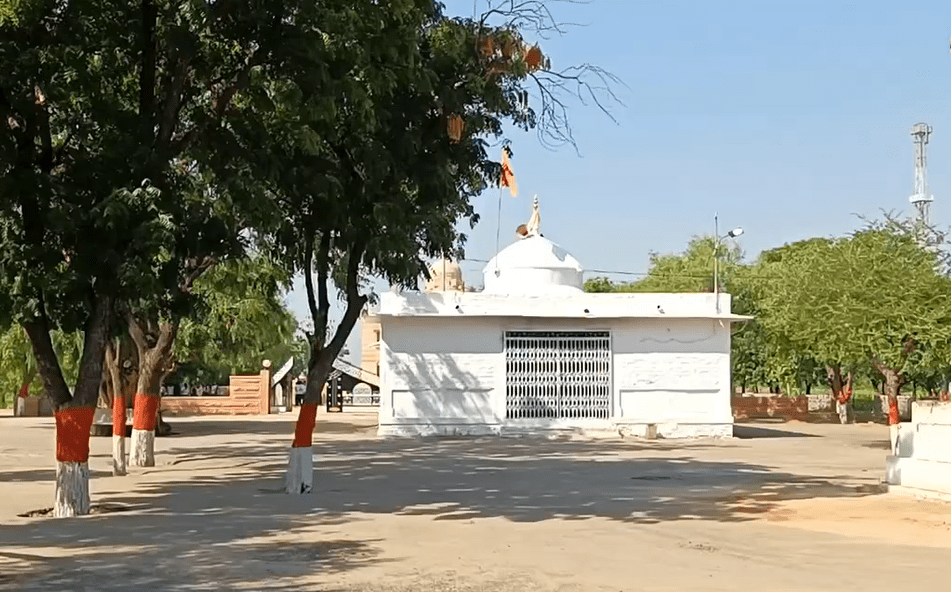
A temple at Khejarli serves as a place of pilgrimage. An annual fair commemorates the villagers’ bravery.
In 2013, the Government of India officially recognised their sacrifice. September 11—believed to be the day of the massacre—was declared National Forest Martyrs Day. The government also introduced the Amrita Devi Bishnoi Wildlife Protection Award. Around the memorial, a dense grove of Khejri trees stands as a living tribute, preserved by the community. This act of courage is remembered not just as a local tragedy, but also as one of the world’s earliest environmental protests. This legacy would later inspire the 1970s Chipko Movement, in which people embraced trees to save them from deforestation.
Leave a Reply