
The Mullaperiyar Dam, situated in Thekkady, Idukki district, Kerala, near the Tamil Nadu border, is operated by the Government of Tamil Nadu under a 999-year lease agreement to irrigate agricultural lands in southern Tamil Nadu. The Mullaperiyar Dam is a masonry gravity dam, designed and constructed to divert the west-flowing Periyar River eastward into the arid regions of Tamil Nadu, supplying water for irrigation and drinking purposes. The primary beneficiaries are the southern districts of Theni, Madurai, Dindigul, Sivaganga, and Ramanathapuram.
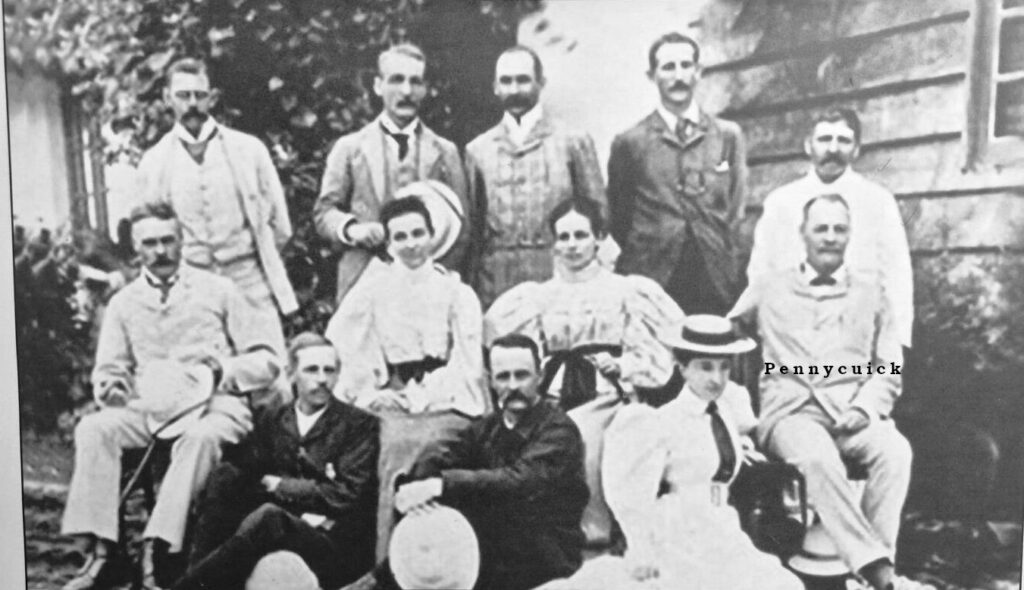
Originally built across the Periyar River, it was called the Periyar Dam. Since it is situated at the confluence of the Mullai and Periyar rivers, the dam was later renamed Mullaperiyar Dam, combining the names of both rivers. Construction began in 1887 under the British Army Engineering Corps, with Colonel John Pennycuick overseeing the project. He successfully completed the dam in 1895.
John Pennycuick (1841–1911) was born in Pune on 15 January 1841, coinciding with the harvest festival celebrated across the subcontinent as Makar Sankranti, Pongal, Lohri, Uttrayana, and other regional festivities. He was one of eleven children—five sons and six daughters—born to Brigadier-General John Pennycuick and his wife, Sarah. His father and eldest brother, Alexander, both fought and died at the Battle of Chillianwalla during the Second Anglo-Sikh War in 1849, after which his grief-stricken mother returned to Britain with her large family.
John Pennycuick studied at Cheltenham College before moving on to the East India Company Military College at Addiscombe, Surrey, in 1857. A year later, he distinguished himself as one of only six cadets to qualify for the Royal Engineers and joined the Corps as a Lieutenant. He arrived in India on 11 November 1860 and steadily rose through the ranks, becoming Second Captain in 1870 and Major in 1876. His greatest legacy came during his six years in the Public Works Department, which lasted until 1896, as Chief Engineer of the Mullaperiyar Dam, a monumental project that transformed thousands of acres of dry land into fertile farmland and showcased his engineering brilliance.
In 1876, the Madras Province was gripped by a devastating famine that lasted two years. Over a million people died of starvation in the province alone, and it is estimated that the famine claimed as many as 10 million lives across the region. Following this catastrophe, in 1882, Pennycuick was asked to submit a revised design. It was decided to divert the west-flowing Periyar River, which originally emptied into the Arabian Sea, towards the east so that it could irrigate hundreds of thousands of acres of dry land that had previously depended solely on the Vaigai River.
By an order dated 8th May 1882, the project was handed over to Major Pennycuick, relieving him of other duties so he could undertake a revision of the plans and estimates for the entire project. In the same year, he submitted a report with detailed estimates, which were eventually approved.
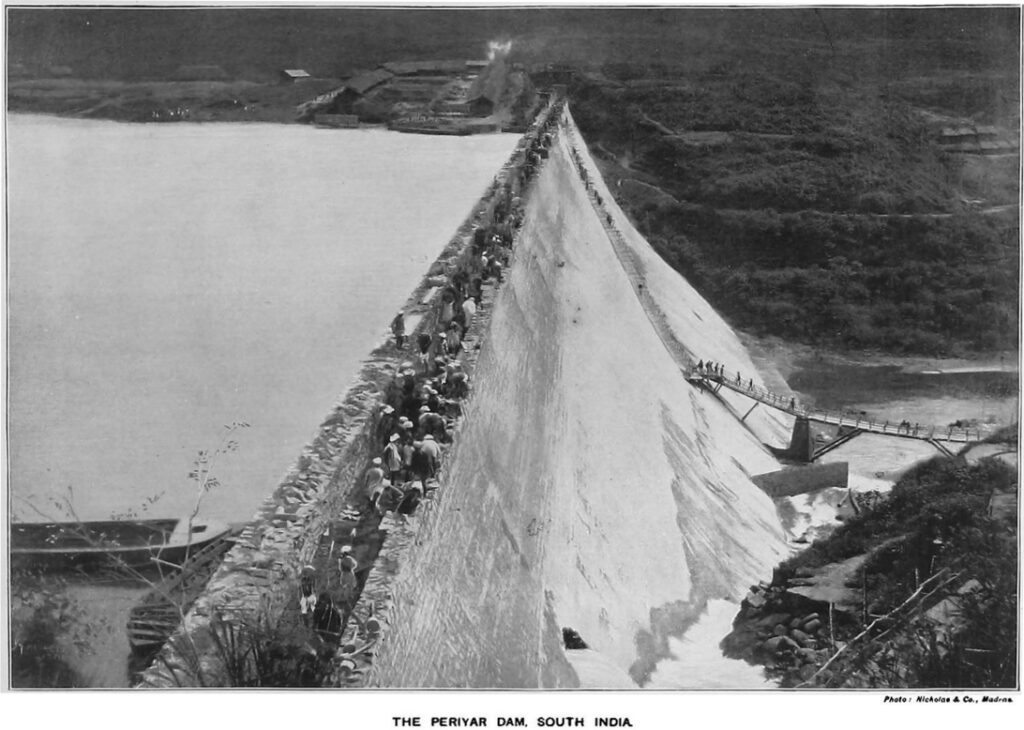
Construction of the dam began in 1887. To acquire land from the Thiruvangur Samsthanam for the dam’s construction, the British government negotiated with its ruler. After lengthy discussions, an agreement was reached: the dam, planned to be 155 feet high with a water-retaining area of 8,000 acres, would require an additional 100 acres for related works, bringing the total to 8,100 acres, for which an annual rent of forty thousand rupees would be paid. The lease was signed on 9 October 1886 for a period of 999 years and was later renewed in 1970.
Numerous innovative methods were employed for flood diversion, ropeways, and construction power. A.T. Mackenzie, one of the engineers, documented the struggle against both nature and bureaucracy, emphasising the scale of the project and its importance in his book History of the Periyar Project. He describes the site as “an uninhabited jungle, seven miles from the nearest cart-road and 20 miles from the closest cultivated land and 80 miles from the nearest railway station.
Records indicate that between 4,000 and 6,000 labourers worked on the project at an elevation of 3,000 feet. Construction materials were transported by boats and carts, and moving both supplies and workers along the remote, steep ghat road was costly and challenging.
The work was unique in the history of engineering, carried out amid unprecedented difficulties on a turbulent river. The surrounding jungle was exceptionally dense and almost impenetrable. In September 1888, elephants caused unusual disruption, breaking into a shed and damaging stores of Portland cement. Flooding was frequent and repeatedly interrupted progress. On several occasions, torrential rains led to sudden surges in the river, completely submerging the works. These floods often swept away piers and other isolated structures, which had to be rebuilt with immense effort against the full force of the stream.
The moderate elevation above sea level, the vast stretches of virgin forest, the intense sun, and heavy rainfall together created conditions highly favourable to the onset of malaria, which proved to be one of the greatest hindrances to the work.
Pennycuick described certain phases of the construction as among the most anxious, difficult, and exhausting undertakings he had encountered in his entire experience.
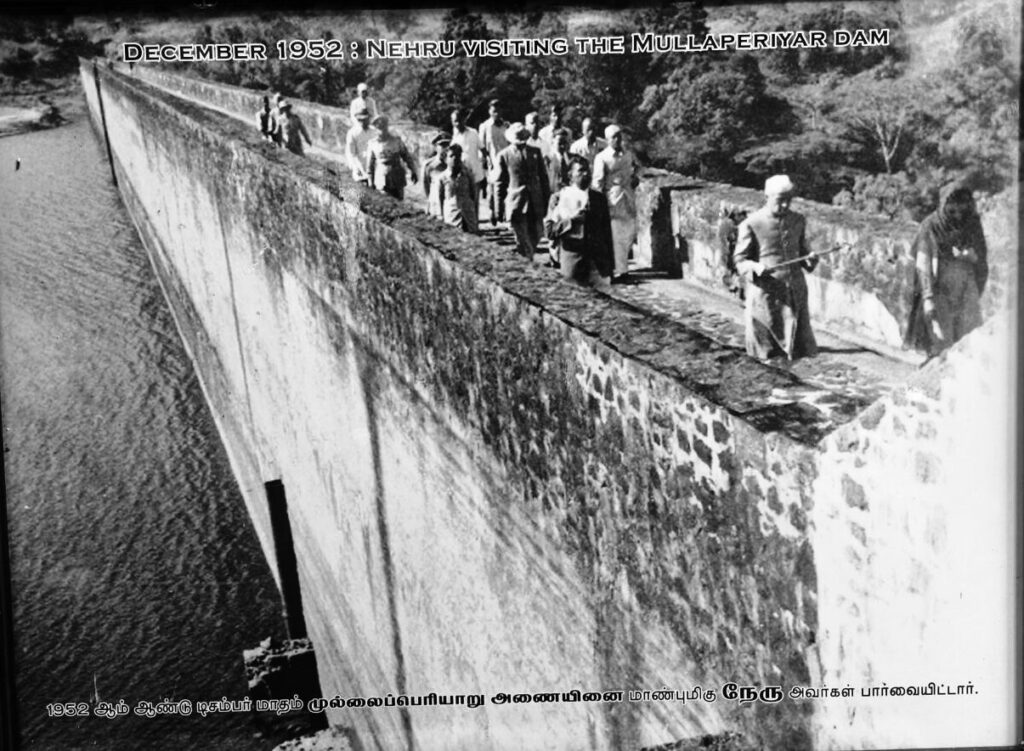
After overcoming those numerous challenges, Pennycuick successfully completed the Mullaperiyar Dam, which was inaugurated in October 1895 by Lord Wenlock, the then Governor of Madras. The project was hailed as an engineering marvel.
Pennycuick said: “I am going to be only once in this earthly world, hence I need to do some good deeds here. This deed should not be prorogue nor ignored since I am not going to be here again”.
He was also a keen cricketer who represented Cheltenham College, the Marylebone Cricket Club, and the Madras Cricket Club. In 1865, he served as honorary Secretary of the Madras Cricket Club and played a key role in securing the Chepauk grounds for the club (the present M. A. Chidambaram Stadium was constructed much later). He also played for Bangalore, often in matches against Madras, and appears to have been a bowler; on one occasion, he took six wickets for 36 runs against Bangalore. He later instituted the J. Pennycuick Trophy for inter-collegiate teams in Madras, a competition that survived until quite recently. One of his final public appearances before leaving India was at the jubilee dinner marking fifty years of the Madras Cricket Club, by which time he was its Vice-President.
The success of the Mullaperiyar Dam project brought Pennycuick increasing recognition. In 1893, he was appointed a member of the Madras Legislative Council. On 10 October 1895, the Queen nominated him as a C.S.I. (Companion of the Order of the Star of India). After retiring from the Public Works Department and returning to England, he was awarded the Telford Gold Medal by the British Institution of Civil Engineers. Settling in Camberley, he briefly served as president and chair of the engineering faculty at the Royal Indian Engineering College, Cooper’s Hill, resigning from both posts after three years. He later worked as a consultant on flood prevention in Queensland, Australia, before finally retiring. He died in Camberley, Surrey, in 1911 at the age of 70 and was buried in Frimley churchyard.
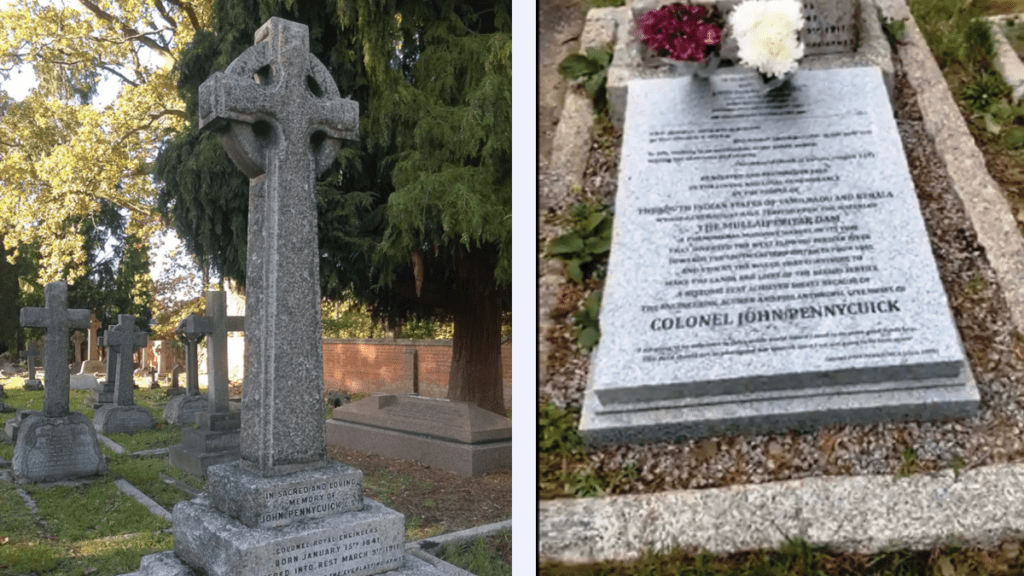
The grave underwent a significant renovation and enhancement in 2018.
Pennycuick and the others who helped build the dam did not do it for fame. When he died in 1911, his obituary made no mention of the dam. However, Pennycuick’s legacy remains strong in Tamil Nadu, especially in the five districts that receive water from the Mullaperiyar Dam. Many children in the region are named after him, while some families have named their daughters Sarah, after Pennycuick’s mother. In districts such as Theni and Madurai, people still keep his portraits and worship him. Annual commemorations and cultural events continue to honour his contribution to the region’s prosperity. Every year on 15 January, the people of Palarpatti celebrate Pennyquick’s birthday as “Penniquick Pongal.”
A new bus terminus in Theni was named after Pennycuick in December 2013. A memorial dedicated to him was unveiled at Lower Camp in Theni district in January 2013. The Public Works Department office in Madurai houses a bronze statue of Pennycuick, and the PWD complex itself has also been named in his honour.
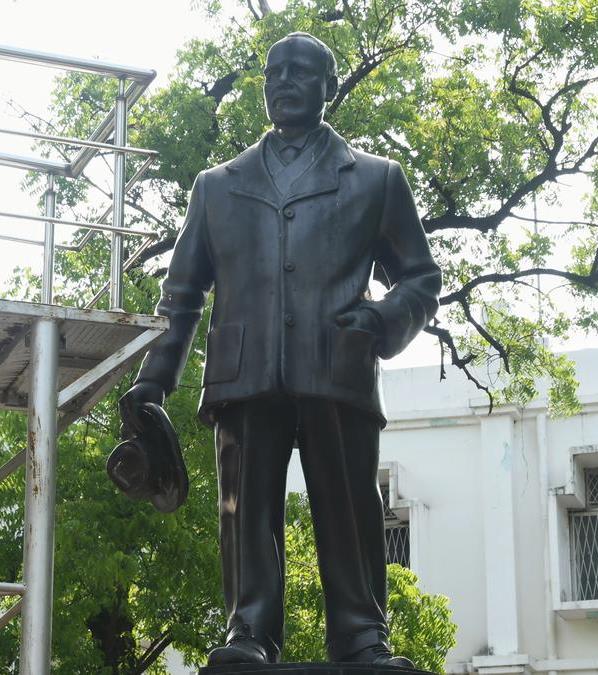
Many rare photographs taken during the construction of the Mullaperiyar Dam and a model of the Mullaperiyar Dam are displayed in this Memorial. Photographs taken during construction work around, including Pennyquick with construction crews in 1893; the chair he used, the small boat he used, the mixing machine, etc., are also on display.
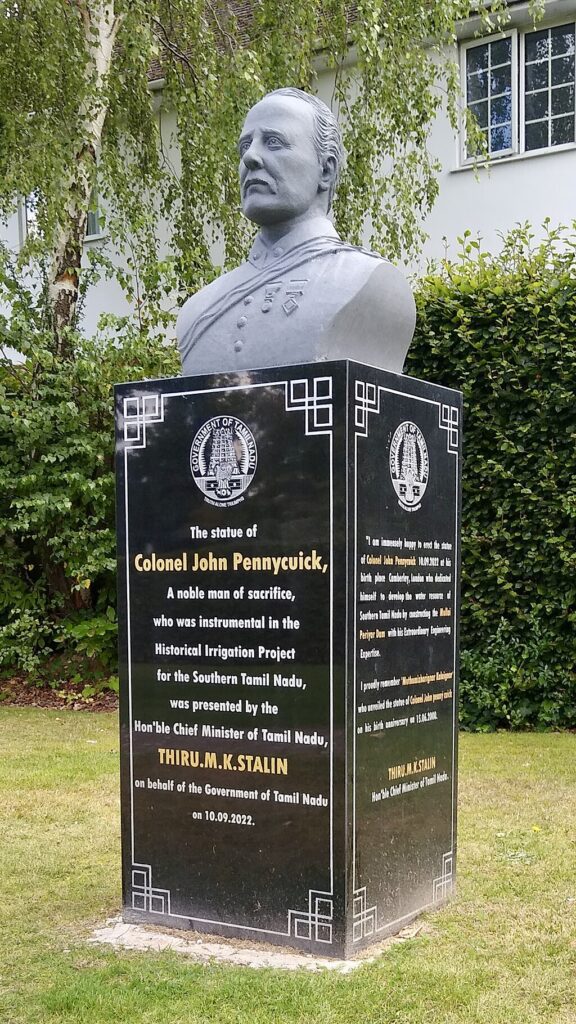
A bust of Colonel John Pennycuick was installed in his hometown of Camberley, UK, on 10 September 2022, with funding from the Tamil Nadu government.
Through unwavering determination and innovative engineering, the Mullaperiyar Dam was completed, standing as a lasting testament to human ingenuity.
Reference:
- “History of the Periyar Project”(1899)compiled by A.T. Mackenzie
- The article of Pennycuick “The diversion of Periyar river”, appeared in “Minutes of proceedings of the Institution of Civil Engineers” Vol CXXVIII, edited by J.H.T. Tudsbery
Leave a Reply