
Prince Salim, who later ascended the throne as Emperor Jahangir, rebelled against his father, Akbar, and established an independent regime in Allahabad between 1599 and 1604. Abul Fazl, the author of the Akbarnama—a biographical account of Akbar’s life and achievements—and the translator of the Bible into Persian, stood as one of the emperor’s most trusted advisers. However, he was a staunch opponent of Prince Salim’s succession to the throne. Salim regarded Abul Fazl as the principal obstacle to reconciliation with his father and as a serious threat to his own ambitions.
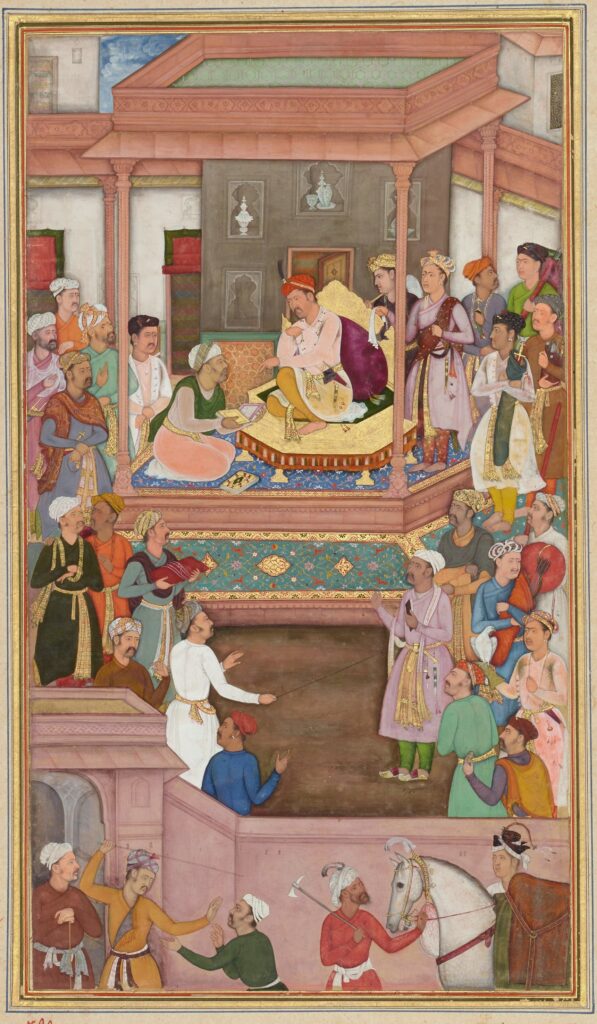
In 1592 A.D., after the death of Madhukar Sah, the ruler of Orchha, Akbar appointed Ram Sah, his eldest son, as the new ruler. Bir Singh Deo, who aspired to Orchha’s throne, resented this appointment. Notably, Swarup Singh (r. 1700–1714), a later ruler of Gingee, was a descendant of Bir Singh Deo of Orchha.
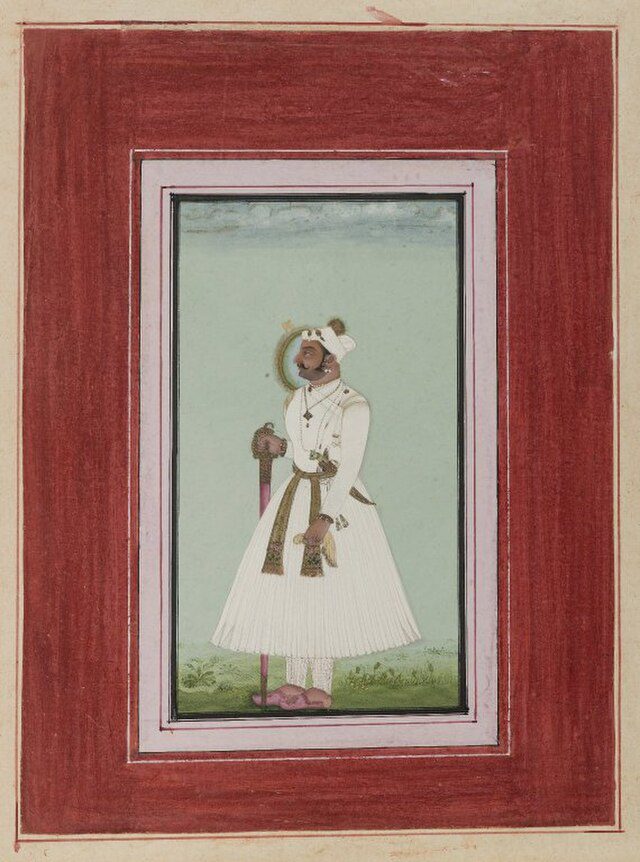
Also, in 1592 A.D., Bir Singh Deo left Baroni, which he had held as a jagir since his father’s rule. With his brothers Indrajit and Pratap Rao and a large army, he defeated Hasan Khan, the Mughal officer at Orchha, and took control of the kingdom.
After Akbar learned of these developments, his imperial army launched an offensive against Bir Singh Deo. Although Bir Singh was defeated and forced to leave Orchha, he could not be completely subdued. In August 1602 A.D., Prince Salim learned that Abul Fazl was returning to Agra from the Deccan campaign. Upon hearing this news, Salim became extremely anxious, fearing the consequences of Fazl’s arrival, and decided to eliminate the threat before it reached the capital.
Salim knew of Bir Singh Deo’s bold acts against the imperial army. He saw Bir Singh as capable of eliminating Abul Fazl. Salim contacted Bir Singh and entrusted him with intercepting and killing Fazl as he travelled. Fazl was to pass through Bundela territory, which Bir Singh knew well. As a reward, Salim promised him the Orchha throne and a rank of 5,000.
On 11th August 1602 A.D., after preparations with Champat Rai and Muzaffar Khan, Bir Singh Deo intercepted Abul Fazl at Sarai Berar, between Narwar and Antri near Gwalior. A fierce battle ensued, in which Abul Fazl’s small force was heavily outnumbered. He fought bravely but was ultimately killed. His camp was plundered, and a large amount of booty fell into the hands of Bir Singh Deo. The head of Abul Fazl was sent to Allahabad, where it was presented to Prince Salim, who received the news with great joy and celebrated the event.
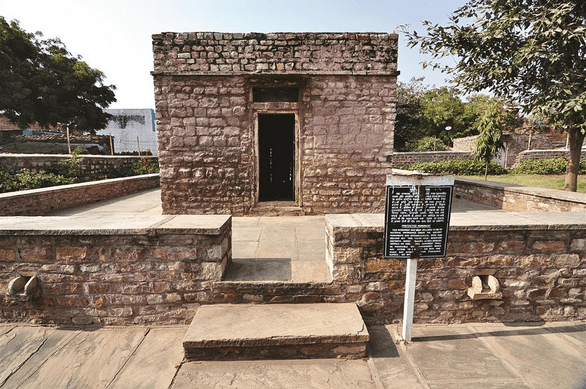
Emperor Akbar was devastated by the death of his trusted confidant. He was deeply grieved and inconsolable, spending day and night in mourning. He neglected all his usual duties, consumed entirely by lamentation and sorrow. Akbar immediately issued orders to Rai Rayan and Raja Man Singh, who were stationed near Antri, to punish the assassin Bir Singh Deo. Under the pressure of the imperial forces, Bir Singh Deo was forced to take refuge in the neighbouring forests.
The assassination of Abul Fazl intensified the rift between Salim and Akbar. Akbar initiated punitive campaigns against Orchha and the Bundela territories, forcing Bir Singh Deo into temporary exile. Despite repeated Mughal expeditions, Bir Singh remained uncaptured until Akbar’s death in October 1605.
Salim’s hostility toward Abul Fazl was profound, as he openly acknowledges in the Tuzuk-e-Jahangiri (also called the Jahangirnama). He notes that Abul Fazl’s insincere feelings and his public and private criticisms posed a serious danger. He wrote that, given his father’s already embittered disposition toward him, Abul Fazl’s influence would be the cause of more confusion and would preclude him from regaining the favour and union with his father.
Following Akbar’s death in 1605, the days of hardship and rebellion for Bir Singh Deo came to an end. When Salim ascended the throne as Emperor Jahangir, he honoured the promise he had made by removing Bir Singh Deo’s elder brother and appointing Bir Singh Deo as the ruler of Orchha. Later, in 1608, Abul Fazl’s son, Sheikh Abul Khan, was appointed governor of Bihar by Emperor Jahangir.
Jahangir, in his memoirs, specially mentions Bir Singh Deo for his skill and bravery. Bir Singh Deo remained loyal to Jahangir from the time he entered his service in 1592 A.D. until 1627 A.D., when he passed away.
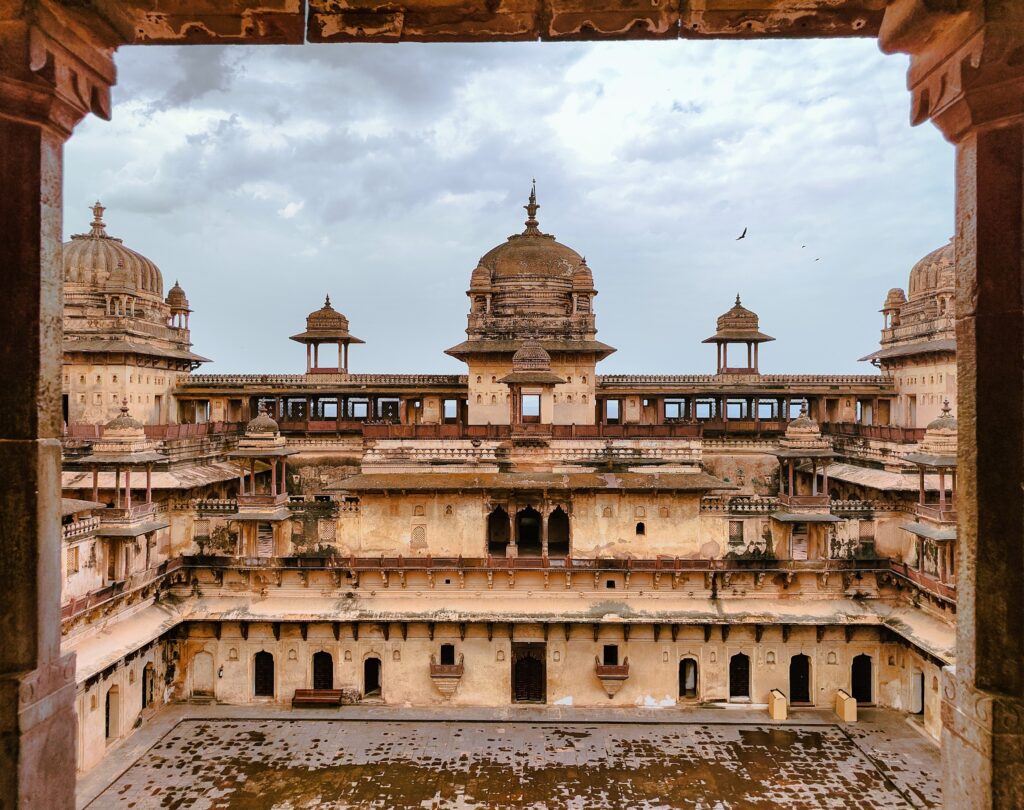

During his rule, Bir Singh Deo became a prolific patron of architecture and Hindu religious sites. He constructed palaces, temples, and gardens in Orchha. Notably, his grandest project, Jahangir Mahal, was built in Datia for Jahangir, who visited and spent a night there. Datia lies about 50 km from Orchha and 75 km from Gwalior, in Madhya Pradesh.
Reference:
Bir Singh Bundela: A Biography by Amir Ahmad
Leave a Reply