
The Vijayanagara Empire was founded in 1336 by Harihara I and Bukka Raya I of the Sangama dynasty. Under the leadership of Krishna Deva Raya (r. 1509-1529), the empire reached its pinnacle, marked by territorial expansion, economic prosperity, and the flourishing of arts and culture. During this golden age, the Vijayanagara Empire became a major centre of commerce, with a thriving capital city renowned for its architectural grandeur and urban planning, but ultimately collapsed after the Battle of Talikota in 1565.
In 1524, Krishnadeva Raya appointed his six-year-old son, Tirumala Raya (born to Tirumala Devi), as the crown prince. Tragically, the young prince did not survive long; he died eight months later, reportedly due to poisoning. In 1529, while preparing for an attack on Belgaum, which was under the control of Adil Shah, Krishnadeva Raya fell seriously ill and passed away on 17 October 1529. Before his final days, Krishna Deva Raya designated his half-brother, Achyuta Deva Raya, as his successor to the throne, ensuring continuity within the royal lineage.
Following Krishnadeva Raya’s death, Achyutadeva Raya (c. 1530–1542) ascended the throne. His reign was largely consumed by struggles against internal revolts, foreign invasions, and the ambitions and intrigues of his minister, Rama Raya.
Achyutadeva Raya was succeeded by his son, Venkata I (c. 1542–1543). Since the young king was underage, his maternal uncle, Salakarāju Tirumala, assumed the regency, despite opposition from the nobles. To secure his position and eliminate rivals, Tirumala orchestrated the assassination of Venkata I and other members of the royal family.
As political turmoil persisted, Minister Rama Raya ultimately moved to seize the kingdom in the name of Sadasiva Raya, the son of Ranga (brother of Krishnadeva Raya and Achyutadeva Raya). Rama Raya captured Penugonda, defeated Tirumala in a series of battles, and killed him in a final engagement on the banks of the Tungabhadra. Following this victory, Rama Raya proceeded to Vijayanagar to perform the coronation of Sadasiva Raya (c. 1543–1568).
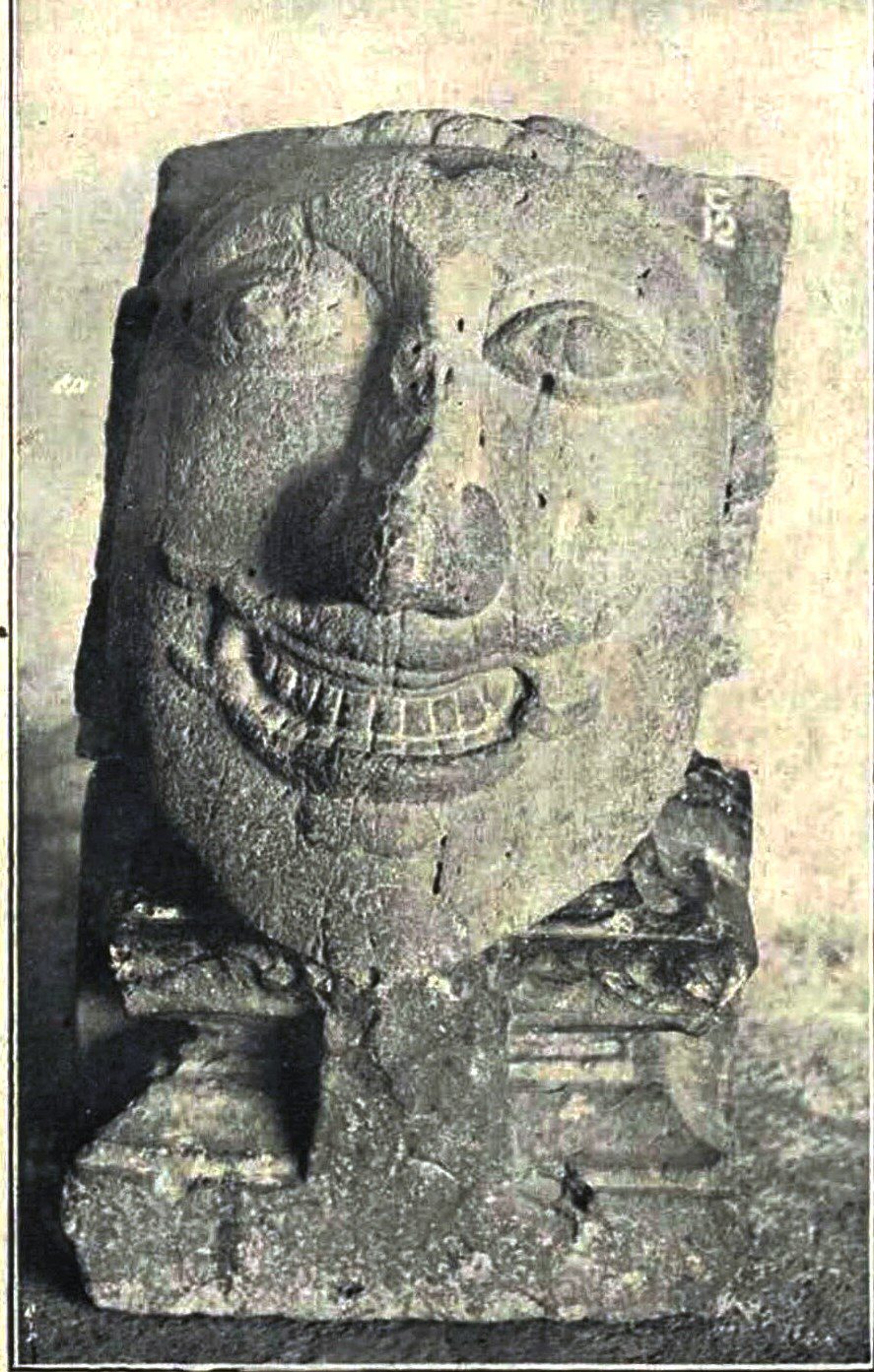
Aliya Rama Raya was married to Thirumalamba, the eldest daughter of Krishnadeva Raya. Being the emperor’s son-in-law earned him the title ‘Aliya’ (meaning ‘son-in-law’ in Kannada), and Sewell often refers to him by this title. Although inscriptions and tablets formally recognised Sadasiva Raya as emperor, Rama Raya effectively controlled the throne. While he did not crown himself, he assumed royal authority, issuing coins in his own name and adopting royal titles. At the same time, Sadasiva Raya was kept under close watch. Despite this, Rama Raya and his brothers, Thirumala and Venkatadri, would prostrate themselves before Sadasiva Raya and pay him obeisance. This ceremonial display of homage was performed regularly from 1550 to 1563, after which it was eventually discontinued.
Under the leadership of Aliya Rama Raya, Vijayanagara initially maintained a strong influence over South India. However, as long-standing political rivalries and shifting alliances grew, Rama Raya’s interference in the affairs of the Deccan Sultanates ultimately led to the formation of an anti-Vijayanagara coalition.
Talikota war
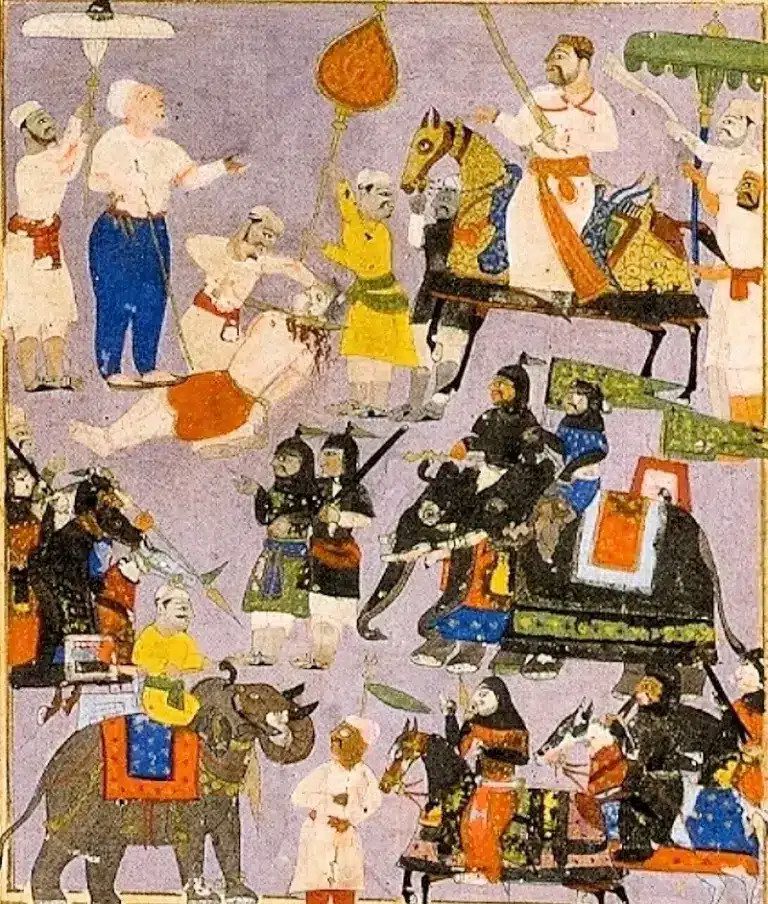
The Battle of Talikota, fought on 23 January 1565, was a pivotal conflict between Aliya Rama Raya—the de facto ruler of the Vijayanagara Empire—and the united forces of the Deccan Sultanates: Ali Adil Shah of Bijapur, Hussein Nizam Shah of Ahmednagar (in present-day Maharashtra), Ibrahim Qutb Shah of Golconda (in present-day Telangana), and the Ali Barid Shah of Bidar (in Karnataka).
The battle took place near Talikota, in the twin villages of Rakkasagi and Tangadagi, and is therefore also known as the Battle of Rakkasa-Tangadi. Today, Talikota is a town in northern Karnataka, located about 80 kilometres southeast of Bijapur. In this region, Tangadagi lies on the south bank of the Ilkal River, while Rakkasagi is situated on the north bank of the Krishna River, approximately 16.3 kilometres east of Tangadagi. During the Battle of Talikota, Sadasiva Raya was the nominal ruler of the Vijayanagara Empire. However, he remained in Vijayanagar as a puppet king, while his minister Aliya Ramaraya and Ramaraya’s two brothers, Thirumala and Venkatadri, led the empire’s forces in battle.
The Deccan Sultans devised a clever ruse to cross the river and strike the Vijayanagara forces. Two or three times, they pretended to retreat, creating the illusion that they could not cross. Misled by this tactic and careless in their defence, the Vijayanagara army advanced across the river. On Tuesday, 23 January, the two armies finally clashed. At a critical point in the war, the Vijayanagara army suffered a severe setback when the Gilani Brothers—Muslim commanders serving in its ranks—defected to the Sultanate side. Their betrayal caused a dramatic collapse in both morale and military formation. Adding to the crisis, Bijapur Sultan Adil Shah, who had earlier promised to remain neutral, entered the battlefield against Vijayanagar. With the situation completely reversed, Ramaraya’s forces were decisively defeated.
The aged Aliya Ramaraya was captured, beheaded, and his head was displayed on a spear to demoralise the Vijayanagara troops. His brother Thirumala Raya was gravely wounded and retreated to Vijayanagar. As for the other brother, Venkatadri, historical accounts remain unclear—some suggest he died in battle, while others indicate he may have fled to save his life.”
Aftermath
The Deccan Sultanate forces plundered the camp where the Vijayanagara troops had been stationed. The victorious soldiers divided among themselves clothing, tents, weapons, horses, and other spoils of war. The sultans kept the elephants for themselves and distributed the remaining items among their warriors.
Realising that the destruction of Vijayanagara—an empire that had flourished in wealth and prosperity since 1336—was imminent, Tirumala Raya took swift action. Before the Sultanate forces could enter and plunder the capital, the Navaratna throne and other priceless treasures were loaded and transported to the safety of Penukonda Fort. Sadasiva Raya, Tirumala Raya, and the rest of the royal family also fled to Penukonda, located in the present-day Anantapur district of Andhra Pradesh.
The aftermath that followed was utterly devastating for the once-great city. The next day, 24th of January, 1565, the abandoned city fell prey to nearby groups who took advantage of the chaos. Bands of Banjaras, Lambadis, Kurubas, and other local communities descended upon the defenceless capital, ransacking shops and storehouses and carrying away large quantities of wealth. It is said that these marauding groups raided and plundered the city six times.
The third day marked the beginning of the end. Three days after the Battle of Talikota, the Deccan Sultanate forces reached Hampi, the capital of the Vijayanagara Empire. They plundered its immense wealth and left its temples in ruins. Every soldier in the Sultan’s army amassed enormous riches.
They slaughtered the inhabitants without mercy, destroyed temples and palaces, and unleashed such savage vengeance on the royal capital that, except for a few large stone temples and walls, nothing remained but heaps of ruins marking where the grand buildings once stood. Statues were demolished, and even the massive Narasimha monolith had its limbs broken. The loot must have been immense. The once-thriving city was left desolate, with the royal centre lying in complete ruin.
Diogo do Couto (c. 1542–1616), a Portuguese historian and chronicler who served as the official record-keeper of Portuguese India, provided a vivid, though secondary, account of the aftermath of the Battle of Talikota. He detailed the chaos and extensive plundering that followed the Sultanate’s entry into the capital. Couto noted that even after the city’s primary inhabitants had fled with their treasures, neighbouring village groups, such as the Banjaras, descended on the abandoned city and looted vast riches. The plunder was so immense that, as he recorded, ‘every private man in the allied army became rich in gold, jewels, effects, tents, arms, horses, and slaves.’
Among the treasures seized from Vijayanagara was a magnificent diamond, described as ‘as large as a hen’s egg,’ which came into the possession of Ali Adil Shah I of Bijapur. The existence of this enormous diamond had been noted earlier by the Portuguese physician and chronicler Garcia da Orta (1534) in his records of the Vijayanagara treasury, long before the city’s fall.
“Cesare Federici, an Italian merchant and traveller, visited the city of Bezeneger (Vijayanagara) around 1567, two years after its catastrophic defeat and sacking. He observed that the once-grand city had become a deserted ruin. In his own words, he wrote: “The City of Bezeneger (Hampi-Vijayanagara) is not altogether destroyed, yet the houses stand still, but empty, and there is dwelling in them nothing, as is reported, but Tigers and other wild beasts.’”
Rise of the Aravidu Dynasty
After the death of the last Tuluva ruler, Sadasiva Rayain, in 1570, it was Rama Raya’s brother, Thirumala (c. 1569-1572), who had the fortune to ascend the throne of Vijayanagar. Thirumala was crowned at Penukonda and established the Aravidu Dynasty. Although the empire survived in a much-reduced form for several decades, the Battle of Talikota is widely regarded as a turning point that reshaped Deccan political history.
Hampi: Where Stones Speak of Glory

Historians consider that few cities in world history have suffered a calamity as devastating as that which befell Vijayanagara. Today, the ruins of Hampi—the once-glorious capital of the powerful Vijayanagara Empire, which thrived from 1336 to the mid-16th century—stretch across the banks of the Tungabhadra River. The site contains more than 1,600 surviving structures spread over 26 square kilometres, including temples, palaces, and monuments. Among the most famous are the Virupaksha Temple, the Vittala Temple with its iconic stone chariot and musical pillars, the Lotus Mahal, and the Elephant Stables. Recognised as a UNESCO World Heritage Site, Hampi is admired for its grand Dravidian architecture, intricate carvings, and historical significance, making it a major destination for tourists and archaeologists alike.
Despite its decline, the Vijayanagara Empire left a lasting legacy that continues to be celebrated and studied. Its contributions to architecture, literature, and culture have had a profound and enduring impact on South India. The Battle of Talikota may have toppled a capital, but it did not destroy the civilisation that flourished under the empire.
References:
- The Aravidu Dynasty of Vijayanagara Vol. I by Henry Heras
- A Forgotten Empire by Robert Sewell
- History of the Vijayanagara Empire by A. Krishnasami
- History of the Vijayanagara Empire by M. H. Rama Sharma
- A History of South India from prehistoric times to the fall of Vijayanagar by K. A. Neelakanta Sastri
Leave a Reply